
 (843) 361-7549
We Get Results*
Thousands of people travel to Myrtle Beach every year. All of that foot traffic is great for the local economy. However, many of those tourists pass by hotels, condominiums, restaurants, boardwalks, etc. with little or no regard for their own safety. Slip-and-fall accidents can happen due to hazards a property owner or occupier either created, had knowledge of, or had reason to know were there and could have been eliminated.
If you slipped and fell at one of our beaches (The Grand Strand) because of some new hazard created while you were there, then you have certain rights afforded to you under SC law. In this article we will discuss those rights, steps you need to follow to protect them, and how Maguire Law Firm may be able to help you create a claim based on the injury you sustained.

Hurt in an Accident? Hire Maguire
Give us a call for a FREE & CONFIDENTIAL Case Review*
The Initial Steps to Take After a Slip and Fall Injury
Your immediate reaction to a slip and fall injury is the first step toward potentially enhancing or hurting your opportunity for success. Here are the top items:
- Seek Medical Care Immediately. It doesn’t matter how good you feel now; Adrenaline can mask pain from your injuries. Most people will have no idea of how much mobility has been lost until the next day. Not only does this create a paper trail documenting your injuries and linking them back to the accident but also provides a time frame of when your injuries began.
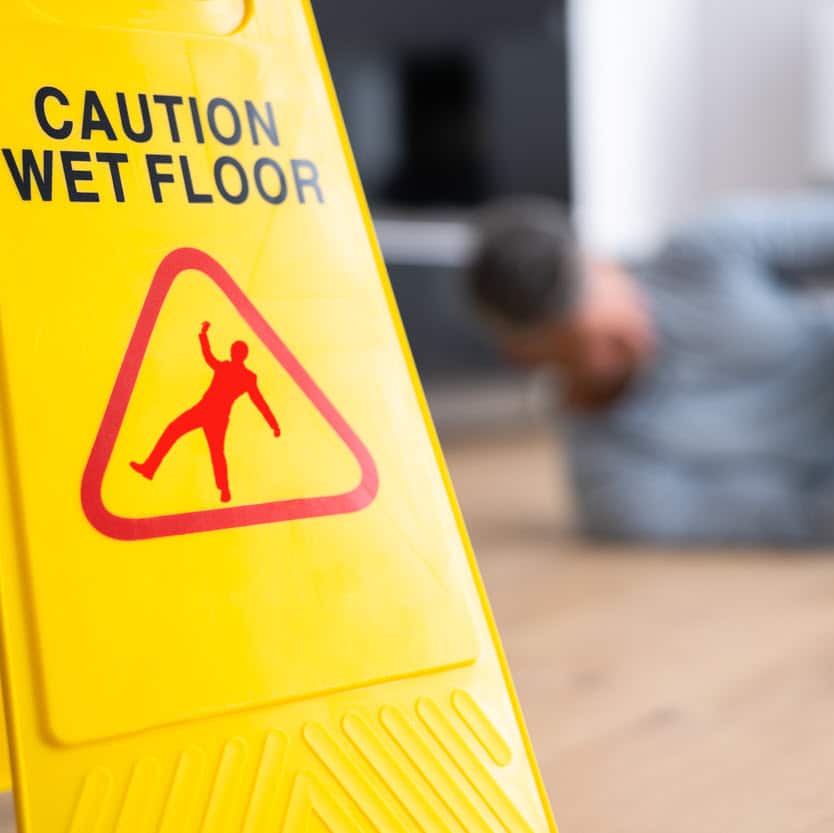
- Document Everything Before Leaving. This includes taking pictures of the area where you fell (the hazard), the location of the signs (wet floor) etc., the broken stairs, low lighting, etc. If a wet floor sign was posted after the fact take a picture of that too. All of these factors will play important parts in building your case.
- Find Witnesses. Find out who saw you fall. Write down their name and phone number so you can call and talk about the incident prior to them forgetting. Finding witnesses right away can help prevent them from being unavailable later on.
- Record Your Incident Report. Inform the owner/property manager of your incident. Request they write a formal incident report stating what happened. Make sure to get a copy of it while you’re there. If they refuse give me the person’s name and date/time you spoke with him/her.
- Don’t Speak With Insurance Adjusters. Once you’ve filed your incident report you’ll probably be contacted by an insurance adjuster representing the property owner. They may seem friendly and interested in hearing your story. Don’t give them a recorded statement; speak to an attorney first. Anything you say to them could hurt your claim.
What is Premises Liability in South Carolina?
Premises liability refers to that body of law that holds landowners (or those who have control over a particular piece of land) liable for injury or damage to someone else due to an unsafe condition on the land itself. However, not all injuries sustained by a person while on someone else’s property constitute premises liability. The extent of a defendant’s responsibility (liability), generally, will depend on how the court categorizes the injured individual (as a trespasser, licensee or invitee) and what they were doing at the time of their injury.
The Three Visitors Classifications under South Carolina Law
- Invited Guests: Any person visiting another’s property for business/financial reasons — Hotel Guest, Restaurant Patron, Shopper, etc. Owners of land owe their invited guests the most responsibility when it comes to their safety and well-being. In order to meet their obligations, owners of land are responsible to regularly inspect the condition of their property; to repair any hazardous situations found on said property; and to give notice to invited guests of any hazardous situation which existed at the time they entered the premises and could not be corrected immediately.
- Social Guests/Licensees: Social guests — Those people who enter onto your property by invitation, however you do not receive compensation from them. Owners of land do owe a duty to social guests regarding notifying them of any hazards that may arise. However, owners of land do not have a positive duty to investigate possible dangers.
- Trespassers: Generally speaking, landowners owe trespassers no responsibilities concerning maintaining a safe environment on their property. As stated previously there are some very limited exceptions to this rule (children). Many of the slips and falls occurring on tourist’s vacations in Myrtle Beach will classify as “invitee” status.
A plaintiff typically will have to demonstrate a defendant either created the hazardous condition (and was aware of its existence) or had actual/constructive knowledge of the hazard, failed in his/her duty to act with ordinary care in relation to the hazard, and that the defendant’s negligence resulted in harm to the Plaintiff.
There are many types of hazards that can create slip and fall cases throughout Myrtle Beach including: Wet Pool Decks; Broken or Uneven Stairs; Missing or Unstable Handrails; Absence of Sufficient Warnings Regarding Wet Floors; Torn/Bunched Carpets; Insufficient Lighting in Parking Garages/Stairwells; Spilled Food/Liquids in Restaurants/Retail Establishments; Obstacles on Walkways
Understanding Modified Comparative Fault in South Carolina
Generally speaking, another issue that is usually raised in almost all slip-and-falls claims is how to allocate the responsibility for the accident(s) among the individuals who were involved in the accidents. Most definitely, the insurance company representing the property owner may argue that you bear some of the responsibility for the accident(s), i.e. lack of attention; improper footwear; ignoring posted warning signs. As indicated above, these are typical defenses used by insurance companies defending slip-and-fall claims.
South Carolina has enacted a Modified Comparative Negligence law, which states that despite being less than 51 percent negligent, you can still receive monetary compensation for your damages resulting from a slip-and-fall case. However, your compensation will be reduced by the percentage of negligence attributed to you. To illustrate this concept, assume you were found to be 20 percent at fault for an accident that resulted in total damages of $100,000. Your award for damages would be $80,000. In contrast, if you were 51 percent or more at fault for the occurrence of the accident, you would receive no damages under South Carolina’s comparative fault law.
Examples of conduct that could potentially limit the amount of damages you can recover in a slip-and-fall claim include:
- Using a cellular telephone while walking
- Choosing obviously unsuitable shoes for the surface
- Failing to heed visible warning signs
Slip and Fall Lawyer
Give us a call for a FREE & CONFIDENTIAL Case Review*
Statute of Limitations and Notice Requirements
In South Carolina, you generally have a total of three (3) years from the date of occurrence, or when the person who was injured knew or reasonably should have known of the claim, to file a civil lawsuit for your personal injury damages as a result of slipping and falling at a hotel or business. Failing to do so may cause the court to dismiss your claim.
There are some exceptions. Claims against government property are controlled by the South Carolina Tort Claims Act. Governmental claims in South Carolina fall under the Tort Claims Act. The claimant has one year to file the verified claim. Otherwise, normally the claimant will have two years after he/she knows (or should have known) of his/her loss to file suit. The limitations period for the tort claim procedure may be extended to three years if the verified claim procedure is followed correctly.
You may think that three (3) years should provide sufficient time for all legal avenues. However, evidence has an extremely short lifespan. Hotels and other commercial establishments may erase video surveillance tapes as quickly as within 24-72 hours as a standard process. Records of maintenance performed to correct hazards that caused someone to trip and fall could be either lost or discarded. The memory of witnesses fades. Hazards causing a person to fall can often be repaired in as little as a few days.
It is imperative that plaintiffs’ attorneys act quickly in order to send a Preservation Demand Letter to defendants, which puts them on notice to protect and preserve any applicable evidence. Waiting too long to take any action is detrimental to valid plaintiff claims.
Common Myrtle Beach Premises Liability Locations
The most common places to find defendants involved in Slip-and-Fall accidents can be defined as those properties or areas along “The Grand Strand” and their attributes.
- Hotels and Resorts create the environment for many of these cases. Examples of this environment include:
- Wet pool surfaces
- Floors that become slick due to patrons carrying water into them.
- Stairways that are poorly lit or poorly designed handrails on balconies.
- Vacation Rental Units and Condominiums add other layers of complexity when trying to establish Liability. Depending upon the location of the fall, individuals who suffer injury will need to determine whether they should pursue liability from:
- Individual Property Owners
- Property Management Firms
- Condominium Associations (with regard to hazardous conditions in public spaces such as parking lots, elevators, hallways, etc.)
- Restaurants/Bars have a duty to maintain their premises in a reasonably safe condition. If a restaurant/bar has created a hazardous situation, whether through direct negligence (creating) or an unsafe environment with which they were aware of or had reason to know of; or by failing to take action reasonably in response to such knowledge/hazardous conditions, and as a result of that failure injures someone then the establishment is likely responsible for their injury.
- Retail Stores Retailers have a duty to act reasonably in addressing hazards that are created by them or which the retailer knows or has reason to know about. In addition, retailers may have to either fix the hazardous condition or warn of it sufficiently. It’s not enough for a store owner to say “I just finished mopping,” in order to eliminate all liability. Whether a warning was sufficient will depend upon specific circumstances regarding the hazard at issue.
- Amusement Parks/Entertainment Complexes bring together large crowds of people creating extreme amounts of wear and tear. Some examples of Hazards commonly present at amusement parks include:
- Wet Ride Surfaces
- Defective Equipment
- Poor Lighting
- Slippery Flooring
- Parking Garages/Lots provide Hazards that are unique unto themselves. Examples include:
- Uneven Pavement
- Poor Illumination
- Drop-offs Not Maintained Properly
- Slippery Surfaces
- Sidewalk/Public Areas may result in city or county liability. Those claims are subject to the South Carolina Tort Claims Act (SCTCA) which has its own special statute of limitations and other requirements that do not apply to all personal injury cases in general, including special immunity rules and statutory limits on recoverable damages.
As a general rule regardless of what kind of property/location, showing evidence that the defendant(s) failed to follow applicable building codes and failed to correct known deficiencies prior to the incident may help to establish negligence, especially if the violation was directly related to the hazard that caused the injury.
Establishing Liability & Obtaining Proof
Slip-and-fall cases are rarely simple. Defense lawyers/insurance companies will spend enormous time trying to reduce their liability/exposure. How you conduct your discovery is just as important as anything else about representing a client.
Your team at Maguire Law Firm examines specifics, including:
- Reviewing maintenance logs and scheduling for inspection/maintenance activities to assess the frequency and duration of these
- Examining if there have been previous accidents/hazards with similarities
- Determining if defendant complied with applicable building codes
- Collecting available videos prior to destruction (overwrite)
As part of our early investigation of a typical slip-and-fall case, we send formal “preservation” letters to defendants, which is official notice to preserve all relevant evidence until they receive notice to release it. If defendants destroy such evidence after receiving our preservation letter, this may be grounds for “spoliation” to be considered and could potentially be used as evidence at trial.