
 (843) 361-7549
We Get Results*
If a commercial truck’s tire failed and the truck, another vehicle, or flying tread injured you, you may have a claim against any person or business whose negligence or defective product caused the crash. A Myrtle Beach truck tire blowout accident lawyer can act quickly to protect the failed tire, obtain inspection and maintenance records, identify the responsible parties, and document your losses.

Truck Accident Lawyer
Give us a call for a FREE & CONFIDENTIAL Case Review*

Negligence (personal injury) claims require establishing three basic elements: duty, breach, and harm resulting from the breach. The South Carolina Supreme Court outlined these in Bloom v. Ravoira.
Why Commercial Truck Tires Fail
Tires can fail due to a defect or because of various factors working together. The reason a tire fails is where investigators will focus their efforts, both as to the evidence and the party(s) they investigate.
Unsafe Tire Condition and Missed Maintenance
Federal regulations apply to commercial motor vehicles; certain commercial trucks must comply with tire requirements stated in 49 CFR Section 393.75. Specifically, no tire shall be operated upon the highway if it has an exposed belt or ply; if there is any tread or sidewall separation; if there is an audible leak; or if there is a cut exposing either belt or ply. The regulations provide that front tires must have at least 4/32 of an inch of tread in the major groove and all other tires must have at least 2/32 of an inch of tread in the major groove.
Additionally, carriers that fall within the scope of 49 CFR §396.3 are required to perform regular inspections on their equipment and repair/maintain them according to those results. Prior to driving, the operator is required, pursuant to 49 CFR §396.13, to check that the vehicle they will be driving is in satisfactory operating condition, and in some cases, it is required to review the previous driver vehicle inspection. Evidence may exist in records showing previous damage, air loss, etc., to a tire, including prior problems that were reported.
Related Article(s)
Myrtle Beach Truck Brake Failure Accident Lawyer
Myrtle Beach Improperly Loaded Truck Accident Lawyer
Inflation, Loading, Heat, and Road Impact
Poor inflation, excessive weight, extreme heat, and road surface impacts are other possible reasons for tire failures. Under-inflated tires tend to flex excessively, causing them to overheat. Excessive weights can overload a tire beyond its rated capacity. Regulations prohibit carriers from loading tires with greater loads than they were designed for and regulate minimum cold inflation pressures based on the weight being carried. The National Highway Traffic Safety Administration also states that inadequate maintenance and prolonged exposure to extremely hot temperatures can lead to tire failures or tread separations.
Impact from potholes, sharp objects, or others can lead to failures. An investigator needs to verify whether damage occurred prior to this event and potentially reduced the integrity of the tire.
Defective or Improperly Serviced Tires
A tire can either be defective due to design or manufacture defects, or be damaged through some type of error made during the mounting process, repairing a tire, or re-treaded. If a defect is claimed against the tire manufacturer, seller, documentation of the tire including photographs, expert examination, and other supporting evidence will typically be needed for such a claim. The injured party’s relationship to the tire will likely dictate what legal theory(s) exist against whom.
Who May Be Responsible for the Crash?
Liability depends upon how the tire failed and whose job it was to perform any related work. More than one party could be liable and share responsibility.
The Driver and Motor Carrier
A driver may be liable for operating a vehicle with a clearly obvious unsafe condition or mishandling the vehicle once the tire failure occurs. A motor carrier may be liable for failing to properly inspect the vehicle, delaying replacing a worn-out part (tire), mismanaging the proper pressure in tires, or otherwise failing to adequately maintain the vehicle. Determine ownership, lease arrangements, and work relationships between entities.
A Tire Shop or Maintenance Provider
Repair companies may be liable if improper mounting of the tire occurred along with a faulty repair or if signs of impending trouble were ignored by the service provider. Documentation regarding work completed, such as order forms and technician comments, would provide information regarding what was requested of technicians and what repairs were completed.
A Manufacturer or Seller
If evidence exists showing that the tire contained a defect (i.e., a manufacturing or design defect), then the Manufacturer or Seller may be liable for damages suffered by the injured party. Pursuant to S.C. Code Ann. § 15-73-10, S.C.’s “strict liability statute” provides that an ultimate purchaser/consumer shall receive compensation for injuries sustained as a result of use of a product that contains a defect when it leaves the hands of the Manufacturer/Seller. However, courts have determined that persons considered to be mere “casual bystanders” are not entitled to relief pursuant to this statutory theory. Therefore, courts ultimately decide whether an individual is a “user” based upon the specific facts surrounding each case.
A Loader or Other Business
A shipper, loader, trailer owner, or another company’s information may need to be looked into if it controlled the load, trailer, or maintenance. Names on the truck do not always identify every business involved.
The Evidence That Can Explain a Blowout
One of the most significant pieces of evidence will likely be the blown-out tire itself. When the tire is removed from the vehicle, especially if it is replaced, either in the course of repairing the damaged vehicle or clearing up debris off of the highway, the tire can be destroyed, disposed of, or lost. This provides an opportunity to request preservation of all items that would need to be preserved.
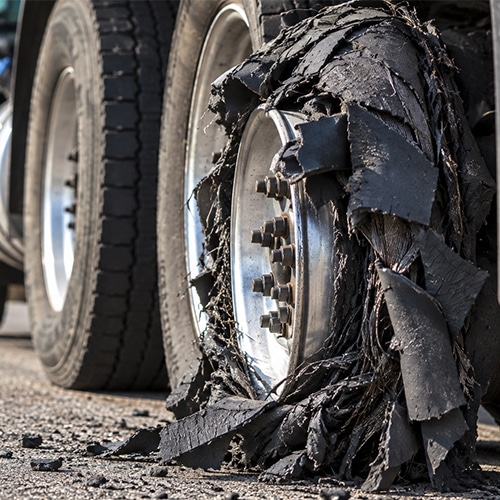 Evidence to consider includes:
- Tread portion of the tire (separated), tire casing, wheel, valve stem, and other associated parts
- Clear photographs of the tire, debris area, vehicle, license plates, vehicle number, and road surface
- Records regarding the original purchase date, mounting date, rotation schedule, inflation pressures, repairs made, and replacement of this tire
- Vehicle inspection reports, driver inspection reports, as well as roadside inspections and maintenance schedules;
- Load records, shipping manifests, bills of lading, dispatch records;
- Dash cam videos taken by other vehicles which were near the scene, electronic data recorded by the vehicle involved in the incident, statements provided by witnesses, police investigation reports;
- Identification numbers printed on sidewalls and any potential matches for recalls initiated by NHTSA or consumer complaints filed with NHTSA;
Federal laws mandate that carriers maintain specific records regarding the maintenance of vehicles they are using for transportation purposes. Federal requirements require the carrier to retain documentation evidencing compliance with federal standards for one year and for a minimum of six months after the vehicle has left the motor carrier’s control. These minimum retention requirements do not protect the tire itself, nor electronic data collected from all vehicles involved, nor recordings made of all cameras used. Prompt attention to preserving these materials will benefit you regardless of how far in advance you anticipate filing a lawsuit.
Compensation Available After a Tire Blowout Crash
Damages for compensation are designed to compensate victims for injuries they sustain due to being involved in a truck blowout crash. Depending upon the evidence presented in support of your claim, you may seek damages that include:
- Emergency services and medical costs, hospitalization, post-hospital rehabilitation treatments and medications; reasonably anticipated future treatments necessary due to injuries sustained in the crash;
- Loss of income and diminished future earning capacity;
- Costs associated with damage to your vehicle and/or other damage caused by the crash;
- Pain and suffering experienced physically and mentally and/or resulting in physical disfigurement/disability and reduction in quality of life.
As stated above, the amount of compensation for damages suffered can depend due to the severity of your injuries, prognosis for recovery from those injuries, time missed from work following the crash, presence/absence of any insurance coverage available to assist in payment of damages awarded by a jury/judge; disputed liability and documented evidence establishing that you will continue to suffer adverse effects into the future.
In South Carolina, punitive damages may not always be available. To pursue punitive damages under South Carolina Code Section 15-32-520, you must provide sufficient evidence to establish “clear and convincing” that your injuries were a direct result of intentional, willful, or reckless acts. Thus, a simple mistake in maintaining equipment may entitle you to receive damages for your losses without meeting the burden established by statute for receiving punitive damages.
Common Liability and Insurance Disputes
The Blowout Was Sudden and Unavoidable
Carriers may assert that the driver had no warning of a problem developing and that an unpreventable failure occurred due to a roadway hazard. In determining whether a road hazard caused an unexpected failure, responses must be supported by Evidence rather than assumptions. Evidence supporting such conclusions may consist of wear patterns found on adjacent tires, pressure history maintained in regard to the tire(s) in question, past repair records for that particular tire(s), analysis of fracture surfaces associated with the tire(s), and descriptions of conditions existing among adjacent tires that may have indicated that problems existed prior to complete separation occurring.
Another Driver Caused the Collision
Insurers may argue that another driver’s negligent actions led to their involvement in the wreck (e.g., tailgating, improper reaction to a situation). South Carolina follows a form of modified comparative negligence. Therefore, even if you, the injured party, are partially responsible for causing your injury (i.e., 50% or less), you still may prevail in recovering damages for your losses; the total amount recovered is just decreased by the percentage you are responsible for.
Maintenance and Product Defect Allegations Conflict
Carrier may contend that product defects caused damage; manufacturer asserts that damage was caused by overpressure/overloading/impact/repair. Careful examination of documents/evidence developed throughout investigations related to defective products vs. Damage caused by service failures may enable separating original manufacturing defects from damage caused during service.
Actions to Take Following a Truck Tire Blowout Crash
- Call 911 (or local emergency number), and then get out of the way of traffic if possible. If you are able, go see a doctor.
- Take photos of everything at the accident scene from a safe distance. This includes the truck, trailer, company identification on the sides of the truck, the license plate #, unit #s on the side of the truck, pieces of debris, and damage to your car.
- Get the names and contact information of witnesses. Many other drivers may be taking video by means of dash cams. Dash cam videos are typically stored for short periods before they are deleted.
- Do not enter traffic to collect debris. Point the investigating officer to where you think it came from. Keep any part that came into your car intact as much as possible without touching it.
- Ask for your collision report. The South Carolina Department of Motor Vehicles allows individuals who are involved in a collision to ask for their crash report through either an online request or form FR-50 after receiving notice of availability.
- Keep copies of all medical records, bills, documentation on work absences, receipts, and photos of injuries that will impact daily activities.
- Contact your insurance company as required by your policies; be cautious about giving authorizations, releases, or recorded statements if requested by the other party’s insurer before consulting with an attorney.
Hurt in an Accident? Hire Maguire
Give us a call for a FREE & CONFIDENTIAL Case Review*Important South Carolina Filing Deadlines
South Carolina Code §§ 15-3-530(5) and 15-3-535 establish that personal injury claims against individuals must be commenced within 3 years after an individual knows or through reasonable diligence should have known of the cause of action. The statute of limitations applies to personal injury cases against individuals governed by 15-3-535. Provisions governing statutes of limitation are contained in sections 15-3-530 and 15-3-535. If a claim involves state or local government entities, then the statute may have additional time limits. Generally speaking, claims against governmental agencies must be commenced within 2 years from when a loss occurs or when a loss should have been discovered. However, filing a written verified claim with the appropriate agency within one year may extend the statute to 3 years from discovery.
Do not use statutes of limitation as an excuse to wait. Business records/video/witness testimony/tires, etc. can disappear much sooner than these time limits allow for you to act!
How a Myrtle Beach Truck Tire Blowout Accident Lawyer Can Help
Claims involving commercial trucks typically involve private parties whose business practices are not publicly disclosed. Attorneys representing clients seeking compensation for damages from truck accidents can issue preservation requests, determine relevant companies that may hold information pertinent to the client’s claim, organize and fund examinations to assess/evaluate equipment failure, acquire relevant business records through both the claim process/litigation process/consult experts relative to causes of tire failure/collision reconstruction.
A Myrtle Beach Truck Tire Blowout Accident Lawyer can analyze all policies available to pay on behalf of all defendants/insurance companies alleging fault, dispute allegations of fault raised by defendants’ counsel, quantify documented losses incurred by clients/clients’ families, negotiate directly with defendants’ insurers as well as bring suit on behalf of clients as permitted by statute before expiration of applicable statute of limitations. Attorneys can investigate facts, help clients discover and obtain relevant evidence possessed by private parties/businesses as well as advocate for clients’ interests utilizing appropriate substantive law theories throughout the claim and litigation process.