
 (843) 361-7549
We Get Results*
If a commercial truck struck you because its brakes did not work properly, you may have a claim against the trucking company, driver, repair contractor, component manufacturer, or more than one responsible party. A Myrtle Beach truck brake failure accident Lawyer can investigate why the truck failed to stop, protect physical and electronic evidence, and pursue damages for the harm the crash caused. The key is connecting a maintenance failure, unsafe decision, or defective part to the collision and your injuries.
Maguire Law Firm represents people injured in truck accidents and families bringing wrongful death claims. The most important proof in a brake failure case may be inside the truck or in company records.

Truck Accident Lawyer
Give us a call for a FREE & CONFIDENTIAL Case Review*

Who May Have a Brake Failure Lawsuit
 Any driver, passenger, motorcyclist, cyclist, or pedestrian who was hurt in a wreck where a commercial truck’s braking system failure likely caused the collision, and they suffered some type of loss (i.e., medical expense, lost wages, etc.), may have a claim. You may also have a brake-failure claim when another event began the accident but defective or poorly maintained brakes contributed to the collision or made your injuries more severe. South Carolina law does not require the brake failure to be the sole cause of your injuries.
To prevail in a negligence case, you generally need to prove someone owed you a legal duty; breached that duty; and proximately caused an injury and subsequent loss. A separate strict product-liability claim may apply when a product was sold in a defective condition that was unreasonably dangerous to the user or consumer, the seller was engaged in the business of selling that product, and the product reached the user or consumer without a substantial change in its condition and thus qualifies under South Carolina Code Section 15-73-10; the state of South Carolina recognizes strict tort liability.
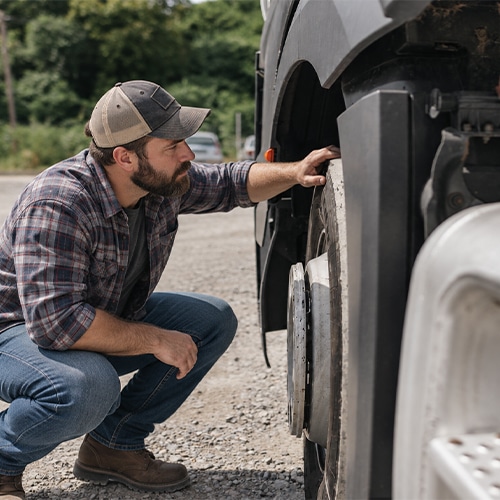
Common reasons for reduced braking performance include worn-out brake pads, poor adjustment, leaks in brake lines, drum or rotor damage, contamination, overheating of the components, and/or installation of improper parts or incorrect repairs. Additionally, excessive speed or heavy loads may place increased demands on an overworked, precompromised brake system.
Related Article(s)
Myrtle Beach Wide Turn Truck Accident Lawyer
Myrtle Beach Truck Tire Blowout Accident Lawyer
Federal Rules Set Minimum Safety Duties
When the federal motor carrier rules apply, each commercial motor vehicle shall be equipped with brakes adequate to stop and hold such vehicle or combination of vehicles. Also, the brakes must operate effectively at all times. These regulations are found in 49 CFR Section 393.40 and 49 CFR Section 393.48.
Before starting the journey, the driver must be satisfied that the service brakes, trailer connections, and parking brake are in good working order. The motor carrier must also perform systematic inspections, repairs, and maintenance on vehicles under its control.
An Annual Inspection Is Not the Whole Story
In general, each commercial vehicle must undergo an annual inspection. However, this inspection alone cannot guarantee that all of the truck’s brakes were functioning safely on the date of the wreck, especially if the date of inspection was 10 months prior, for example. In addition to requiring motor carriers to document that employees performing brake inspections and services have received sufficient training or experience in brake servicing and inspection.
Who May Be Responsible for the Crash
Regardless of who owns the truck, there will always be someone liable. Liability always follows the evidence. There could be multiple parties liable depending upon the facts. Examples include:
- The motor carrier, if it failed to maintain a tractor or trailer under its control, ignored reported defects, used an unqualified brake inspector, or placed an unsafe vehicle back in service.
- The driver, if the driver failed to satisfy applicable inspection duties, ignored a warning light or low-pressure condition, or drove at an unsafe speed or following distance for conditions.
- A maintenance contractor, if negligent inspection, adjustment, installation, or repair left the brake system unsafe.
- A component manufacturer or seller, if a defective valve, hose, chamber, adjuster, lining, drum, rotor, or related part caused the failure under an applicable product liability theory.
- An owner, leasing business, loader, or other contractor, if its conduct contributed to the failure.
In many instances, both the carrier and the mechanic will point fingers at each other. But simply pointing out how the other party might be liable does not resolve the issue. Any communication between the two parties regarding work orders, problems with repairs, correspondence via invoice, inspection documentation, witness testimony, and any other type of documentation will show what each party was aware of and what each party did.
Evidence To Determine Why the Truck Did Not Stop
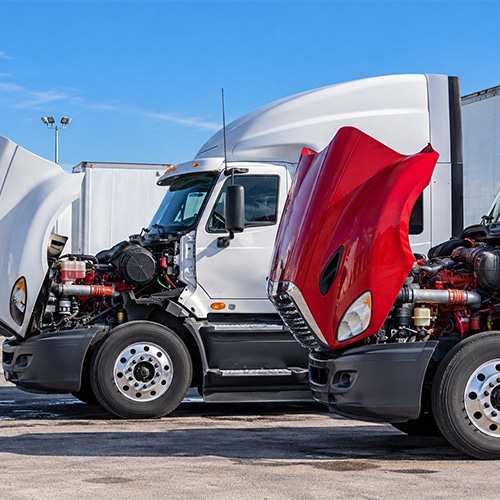
Most often the tractor and trailer are critical pieces of evidence. An inspection of the vehicles may identify signs of excessive wear, improper adjustment, leaks resulting in air pressure loss, damage from previous accidents or incidents, heat markings on drums and rotors indicating excessive friction during stopping events, and which brakes functioned properly. It is essential that any removed parts be saved from further repair or replacement to preserve the evidence.
 Documentation may also be crucial. A well-planned investigation may review:
- Maintenance records documenting scheduled services, past defect notifications, repair invoices, and annual inspections.
- Inspection reports submitted, along with certifications that all safety-defect issues were corrected.
- Qualifications of individuals who performed inspections, maintenance and/or repairs on the brake systems.
- Electronic control module data, telematic data, video taken by dashboard cameras, dispatcher’s messages, and any available data relating to brake applications.
- Warranty claims, recall notices, purchase records, and histories of the failed component.
- Police reports detailing the collision along with pictures taken at the scene, video footage from traffic cameras, witness statements, and damage assessments of all involved vehicles.
Timeliness is a factor because federal regulations govern how long carriers must retain certain records. Most general maintenance records must be retained for a minimum of one year as long as the carrier maintains possession of the vehicle. Following that time frame, carriers are required to retain these types of records for six months thereafter the vehicle leaves the carrier’s control. Reports prepared by drivers identifying defects typically must be retained for a minimum of three months. Property carrying drivers are not required to submit reports when no defect exists; therefore, a lack of a report alone cannot establish that an inspection took place nor that the brakes were in good operating order.
Common Disputes in Brake Failure Claims
Carriers may state that the incident was an unforeseeable mechanical failure. All allegations of an unknown mechanical failure should be verified through a thorough examination of the vehicle’s maintenance record, any complaint made by the driver relative to brake performance or safety concerns prior to the occurrence, any warning lights present on the instrument panel prior to the occurrence, post-accident examination results by certified inspectors, and whether regular maintenance was actually conducted. A mechanical failure is not necessarily unforeseeable simply because it occurred suddenly. Evidence of missed maintenance, prior brake complaints, warning lights, or defects that should have been discovered through reasonable inspection may support a finding that the failure was preventable.
Defense counsel may assert that another motorist cut into the path of the tractor-trailer. Evidence gathered through reconstruction efforts may assist in determining whether speed and following distance contributed to this scenario.
South Carolina employs Modified Comparative Negligence. If a plaintiff’s negligence is less than or equal to that attributed to defendants in a case, then plaintiffs may still recover compensation for damages suffered as a result of the injury, but the amount awarded will be diminished in proportion to their degree of fault. The South Carolina Supreme Court explains this rule in Berberich v. Jack. Therefore, if a defendant claims that your driving contributed to the crash, evidence such as video, vehicle damage, physical evidence, electronic vehicle data, and witness statements may help determine what actually happened.
Damages Available After a Serious Truck Crash
Plaintiffs in a truck collision lawsuit may be entitled to various forms of compensatory damages. Compensatory damages encompass a variety of expenses associated with medical treatment and rehabilitation costs; future medical treatments; lost wages; reduction in earning capacity; damage to a vehicle; pain; emotional trauma; disability; disfigurement; and loss of enjoyment of life. Spouses may also pursue loss of consortium claims under specific circumstances.
Compensatory damages are intended to compensate you for losses legally caused by the defendant’s conduct, whereas punitive damages are designed to punish particularly egregious conduct by defendants. South Carolina requires clear and convincing evidence that the harm resulted from wilful, wanton, or reckless conduct under South Carolina Code Section 15-32-520. Therefore, punitive damages are not automatically granted even when repeated complaints regarding defective brakes were dismissed despite being repeatedly warned by the motor carrier, but investigation is possible.
If the crash results in fatalities, then South Carolina statute provides for wrongful death claims on behalf of specific family members (designated beneficiaries) of deceased persons to be prosecuted by the executor/administrator of the decedent’s estate. South Carolina statutes providing for wrongful death claims are located in South Carolina Code Sections 15-51-10 and 15-51-20. The potential claims available and how recovered funds will be distributed among family members should be determined according to their individual circumstances.
Steps to Take After a Suspected Brake Failure Crash
- Receive immediate medical attention and comply with prescribed treatment. Some severe injuries may not be immediately evident at the site of the collision.
- Report the collision to law enforcement when required. In South Carolina, crashes involving injury or death must be reported immediately to the appropriate police authority. If law enforcement investigates the crash, you may request a copy of the collision report from the South Carolina Department of Motor Vehicles online or by using Form FR-50. If a qualifying crash is not investigated by law enforcement, the driver or owner generally must submit Form FR-309 to the SCDMV within 15 days.
- Document any visual images taken at the scene (photographs/video), witness names/contact info, medical documentation/bills/invoices/wage records/towing records/personal property damaged/damaged vehicles.
- Prioritize preserving your vehicle’s evidentiary value. Damage patterns may help qualified investigators or reconstruction experts evaluate the direction and mechanics of impact.
- Notify your insurance company as per policy requirements; however, proceed with caution when submitting recorded statements/wide-ranging medical authorizations/early settlement offers. A trucking company’s insurance representative may ask questions before knowing the exact nature and scope of injuries sustained.
- Consult with an attorney timely enough to direct preservation of damaged trucks/components/electronic data/recording/documentation.
Collisions occurring within Myrtle Beach city limits may be investigated by the Myrtle Beach Police Department Traffic Division. Collisions occurring in surrounding areas may be investigated by local agencies or the South Carolina Highway Patrol. Civil lawsuits properly filed in Horry County are generally heard in the Court of Common Pleas for the Fifteenth Judicial Circuit. However, jurisdiction and venue will ultimately depend on the parties and specifics of each case. The South Carolina Judicial Branch website contains contact information for Horry County Courts along with court listings.
Hurt in an Accident? Hire Maguire
Give us a call for a FREE & CONFIDENTIAL Case Review*How a Myrtle Beach Truck Brake Failure Accident Lawyer Can Help
Attorney assistance may be especially helpful after the truck has been fixed and multiple entities have serviced the truck’s brakes, and/or the carrier denies that the brake system on the truck failed, and/or your injuries were severe, and/or you are being pressed by an insurance company to provide a rapid statement or settlement. An attorney can find the appropriate entities to contact, issue preservation demands, schedule an inspection, and locate records using either the claim process or the litigation process. Additionally, if there is a need to utilize experts in technical areas, such as engineering or mechanics, they can assist with identifying those experts.
Counsel can record your damages, respond to efforts to place blame elsewhere, identify coverage, negotiate a settlement, and file a lawsuit when no agreement exists. No attorney can guarantee results; however, timely investigation can help preserve and develop an evidential base relevant to your claim.
South Carolina Deadlines for Filing a Claim
Generally speaking, South Carolina claimants have three (3) years for actions based upon personal injury and three (3) years from the time of death for wrongful death actions. These statutes are located within South Carolina Code Section 15-3-530. However, a shorter statute of limitations may apply in some instances; e.g., in accordance with the South Carolina Tort Claims Act in specific circumstances where a governmental entity may be involved.
Additionally, the applicable statute of limitations is not simply a matter of “wait and see.” Typically, the truck will be repaired, and documentation (e.g., maintenance records) will expire much sooner than this. Also, exceptions may shorten the applicable timeframe.
Discuss a Brake Failure Truck Crash With Maguire Law Firm
Maguire Law Firm represents people hurt in truck accidents and families affected by fatal crashes. To request a free and confidential case review, call or use our online case evaluation form. There is no attorney fee unless we recover compensation for you. Clients may also be responsible for case expenses as explained in the written fee agreement. The contingency fee is calculated as a percentage of the gross recovery before case expenses are deducted.