
 (843) 361-7549
Hazardous Intersections for Cyclists in Myrtle Beach
There are several intersections throughout Myrtle Beach where cyclists have repeatedly crashed.
One of the first intersections listed in the state’s traffic accident reports is the intersection of U.S. 501 and Carolina Forest Blvd., due to its multiple lanes and confusing turn movements that even longtime residents of the area struggle to navigate. About 20 miles farther south, the intersection of U.S. 17 Bypass and S.C. 544, near the town of Surfside Beach, has been identified by the state as having one of the highest numbers of bike crashes per year. Also listed as being particularly hazardous are the intersections of U.S. 501 and S.C. 544, U.S. 17 and S.C. 544, U.S. 501 and Gardner Lacy Rd., and U.S. 17 and Glenns Bay Rd., as each has recorded over 40 bike crashes in a single year. Other high-hazard locations include the intersection of Ocean Blvd. and 16th Ave. N, near the entrance to the boardwalk, and Kings Hwy. and 9th Ave. N.
Bike riders have hazards coming at them from several directions. They may be hit by turning vehicles that fail to yield, as drivers tend to only check for other cars, rather than pedestrians or bicycles. There are multiple lanes to contend with when trying to safely cross the street, and traffic signals rarely give cyclists sufficient time to clear the intersection before drivers start racing to beat the red light.
To increase their chances of avoiding injury, cyclists can use designated pedestrian crosswalks when available and wait until the intersection is completely clear before attempting to enter the intersection. Additionally, wearing bright clothing and lights (even during the daytime) helps motorists notice them earlier.
Related Article(s)
Are E-bikes Really More Dangerous Than Standard Bicycles?

Hurt in an Accident? Hire Maguire
Give us a call for a FREE & CONFIDENTIAL Case Review*
Danger Zones Along Ocean Boulevard
Ocean Boulevard is a coastal highway that places drivers, cyclists, and pedestrians together on a regular basis. During motorcycle rallies and festivals, Ocean Boulevard has been temporarily narrowed by barricades, which forces cyclists to either ride in traffic or along the barricade. When one cyclist decided to ride along the barricade in 2002, he suffered a concussion and broken ribs.
Another source of unpredictability is motorist behavior. On July 25, 2005, a motorcycle officer was attempting to stop a Toyota SUV on Ocean Boulevard when the driver fled. The officer gave chase, and when he again attempted to stop the SUV, the driver accelerated and struck him. This example illustrates how quickly a normal traffic stop can turn into a potentially deadly encounter for cyclists.
The majority of the crashes that occur on Ocean Boulevard stem from driver distraction. Motorists traveling slowly to locate parking often don’t look ahead and frequently glance at their cell phones or GPS units instead. At night, the combination of neon signs and headlights creates a dizzying display that makes it difficult to distinguish between a car and a bike. During spring break and Bike Week, the number of motorists operating their vehicles while impaired increases significantly.
When riding on Ocean Boulevard, cyclists should take advantage of side paths whenever available and ride as far to the right as safely possible. It is absolutely essential to wear reflective gear and blinkers at night.
Improved safety measures, including physically separating bike lanes, improved lighting, and consistent speed limit enforcement, would greatly reduce the dangers associated with riding on Ocean Boulevard.
Bicycle Accident Lawyer
Give us a call for a FREE & CONFIDENTIAL Case Review*
Injury Claims and Crashes During Myrtle Beach Bike Week
Every year, the Grand Strand attracts large crowds of bikers during the motorcycle rallies known as Bike Week. As a result of the influx of motorcycles, the number of crashes and fatalities also increases dramatically. During the 2018 spring rally, one biker lost his life, and over 25 motorcycle accidents occurred. By the end of the 2019 spring rally, local authorities reported over a dozen motorcycle crashes and at least five fatalities, with many of the crashes involving groups of bikers who misjudged the stopping distance of a lead biker or ran red lights.
Recent incidents are equally alarming. In early May 2005, a female passenger lost her life when the motorcycle she was riding on collided with a median on Sea Mountain Highway. According to police, the motorcycle’s rider was traveling at speeds greater than 100 mph and had consumed intoxicants prior to the collision. Two days later, two bikers were killed in separate incidents on Towne Centre Parkway when their motorcycles left the roadway. Another male bicyclist lost his life near Conway after losing control of his motorcycle while attempting to avoid an animal.
The high incidence of crashes during Bike Week results from a combination of factors. A large number of inexperienced bikers, many of whom rent high-performance motorcycles specifically for the rally, ride in large packs. Many bars offer special deals to patrons, and spectators line the roadsides, creating an environment in which bikers are encouraged to test their skills and abilities on unfamiliar roads.
Victims of motorcycle-related accidents during Bike Week may have difficulty establishing the liability for their injuries. To protect their health and legal rights, victims should photograph the accident scene, the offending vehicle, and any debris that resulted from the accident. They should also attempt to gather names and contact information from any witnesses and the offending party. Even if they believe they have sustained minor injuries, victims should seek immediate medical attention, as internal bleeding and head injuries may not manifest themselves immediately. Obtaining assistance from a qualified attorney can aid victims in recovering the damages they deserve and help them negotiate with insurance companies that may be attempting to limit their liability.
Pattern of Bicycle Crashes on Highway 17 in Horry County
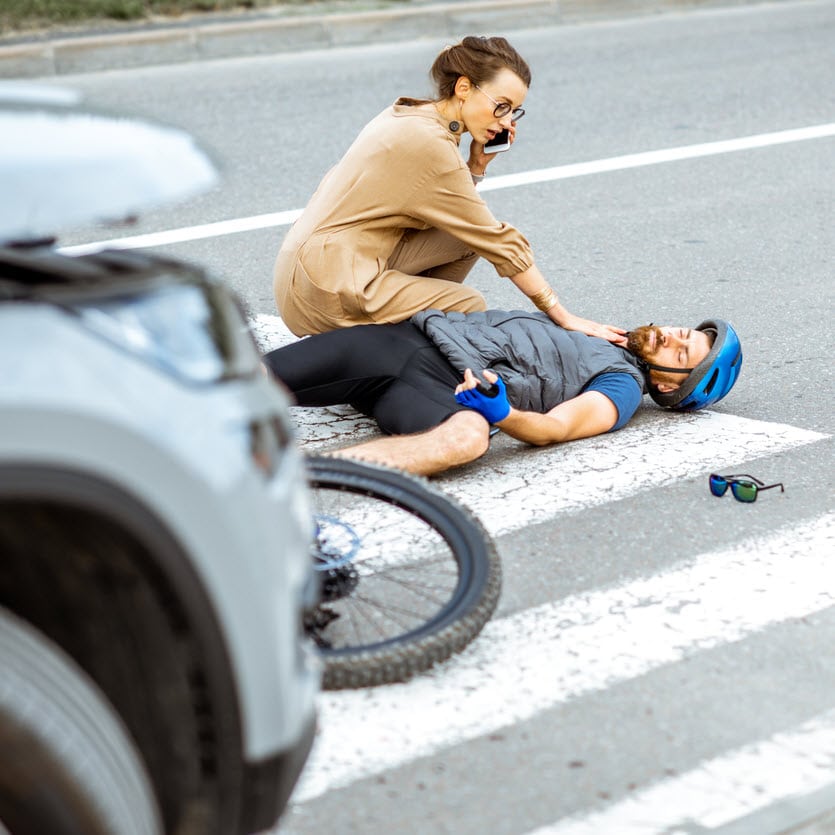 Highway 17 and its business routes carry tens of thousands of vehicles daily through the Grand Strand with very little to no dedicated bicycle infrastructure. In 1997, a cyclist was struck from behind and died while riding southbound on the Highway 17 bypass at Bellamy Avenue in Murrells Inlet. Another Murrells Inlet incident occurred in 1998 when a cyclist was struck by a vehicle turning left directly in front of him, causing the cyclist to fly over the hood of the vehicle and resulting in a torn rotator cuff that required surgery and several months of physical therapy.
Unfortunately, this type of collision continues to occur. In September 2004, an e-bike rider was hospitalized after a crash at Highway 17 and Pinehurst Circle in Little River. In February 2006, a woman in Surfside Beach admitted to being distracted while driving and striking a cyclist on Highway 17 near 15th Avenue South. The cyclist was thrown from his bike, and officers stated that the driver appeared to be intoxicated; however, they could not pursue a DUI charge due to the amount of time that had elapsed before finding her.
These types of collisions follow a common pattern. Highway 17 is a fast-moving route with numerous driveways and crossovers. Often, drivers leaving parking lots fail to check for bicycles, and distracted driving causes vehicles to drift into bike lanes. Whenever possible, individuals who must ride on Highway 17 should try to utilize parallel roads and, when crossing the highway, attempt to do so at intersections controlled by traffic signals.
Improving Cyclist Safety and the Legal Options Available to Them After an Incident
Improvements in infrastructure are critical to improving cyclist safety. Separated bike lanes, green pavement markings, and clearly marked conflict zones assist drivers in anticipating the presence of bicycles. While the city of Myrtle Beach has increased police patrols in congested traffic areas, it has also conducted public awareness campaigns to educate motorists on how to safely operate around cyclists.
Both education and infrastructure improvements are necessary to improve cyclist safety. Cyclists and motorists need to understand that cyclists have the same rights to the road and should be provided with at least three feet of clearance when passing. Allowing distractions while operating a vehicle can cause serious harm to cyclists. Cyclists need to operate in the same direction as traffic, obey traffic signals, and utilize lights and reflective materials, even during the daytime, and always wear a helmet.
While an individual cannot prevent all potential collisions, they can take steps to ensure that their health and legal rights are protected. If a cyclist is involved in a collision, they need to call emergency services immediately, even if their injuries appear minor. Adrenaline can mask serious injuries, such as internal bleeding or concussions. Once emergency personnel arrive at the scene, cyclists should take photographs of the scene, the offending vehicle, and any debris. Cyclists should obtain witness statements and contact information from the offending party.
Cyclists should also receive immediate medical treatment to assess the extent of any injuries. Contacting Maguire Law Firm will provide cyclists with experienced attorneys who are knowledgeable in South Carolina traffic laws and can help them recover fair compensation for their injuries. Additionally, attorneys from Maguire Law Firm can fight for cyclists against insurance companies that want to pay as little as possible for their injuries.
Contact us today to discuss your case.
Schedule a free* consultation to learn how our team can help you pursue fair compensation for your injuries.
* Disclaimer: Past results do not guarantee future outcomes. “Free* consultation” or “Free* Case Evaluation” refers only to the initial evaluation of your case and does not imply that legal representation is free*. Clients may be responsible for costs in addition to the attorney’s fees. Percentage fees are calculated before deducting costs from the gross recovery. No comparison is intended or implied between Maguire Law Firm’s services and those of other lawyers. Testimonials and endorsements do not constitute a guarantee, warranty, or prediction regarding the outcome of your case. Attorney Ian Maguire, Office: 1601 North Oak Street, Myrtle Beach, SC 29577.
Last updated Monday, June 8th, 2026