
 (843) 361-7549
Under South Carolina law, the plaintiff in a truck accident lawsuit is allowed to seek reimbursement from all parties that made some contribution to the occurrence of the wreck; but identifying all of the relevant parties, gathering and preserving evidence, and adhering to statutorily mandated time limits are all critical tasks that must be completed expeditiously.
Below is an overview of everything you need to know regarding how liability operates under South Carolina law, the parties that may be held accountable for your losses, the time limits within which you must act, and the first steps you should take today to safeguard your claim.

Hurt in an Accident? Hire Maguire
Give us a call for a FREE & CONFIDENTIAL Case Review*
Quick Summary of South Carolina’s “Fault” & “Liability” Principles
South Carolina is a fault-based jurisdiction. As such, when you are injured in a truck accident, you must establish that another person acted negligently (“negligent”), i.e., did something incorrectly or omitted doing something he/she should have done, and that omission was the proximate cause of your injury.
Modified Comparative Negligence Principle
Additionally, South Carolina follows a form of modified comparative negligence. Under this theory, although you may be partially culpable for causing an automobile accident, as long as your degree of negligence is less than 51%, you will be entitled to receive some portion of your damages. If you are found to be 51% or more responsible for an automobile accident, you will not be permitted to receive any compensation for your losses.
For example:
| Your Fault | Total Damages | Amount You Recover |
| 0% | $500,000 | $500,000 |
| 10% | $500,000 | $450,000 |
| 25% | $500,000 | $375,000 |
| 50% | $500,000 | $250,000 |
| 51%+ | $500,000 | $0 |
Because of this exact reason, trucking firms and their respective insurance providers actively engage in efforts to shift fault from themselves to the victim. Moreover, if they are successful in reducing their liability exposure by even a small margin (e.g., 20%), it would result in significant cost savings. Therefore, having an experienced attorney represent you is vital because your attorney will recognize the tactics employed by trucking firms and insurance providers designed to reduce their exposure to liability.
Vicarious Liability
Another concept that may be useful to understand is vicarious liability. This is the legal principle whereby an employer may be liable for the conduct of its employees while acting in the course and scope of their employment. For instance, if a commercial truck driver employed by a carrier ran a red light and struck your Vehicle, the carrier itself may be liable for the loss.
Related Article(s)
South Carolina Truck Accident Laws You Should Know
South Carolina Truck Accident Claims and Wrongful Death Cases
Statutes of Limitation and Time Limits
As stated previously, South Carolina provides its citizens a limited time period to initiate a lawsuit. If you fail to timely file a lawsuit prior to the expiration of the statute of limitations, you will likely forfeit your rights to obtain compensation regardless of how compelling your claim(s) may be. Below are examples of statute of limitations time periods applicable to different types of defendants and other relevant details:
| Defendant Type | Deadline | Additional Requirements |
| Individual or private company | 3 years from the date of the accident | None beyond filing |
| Wrongful death claim | 3 years from the date of death | Filed by estate representative |
| Government entity or employee | 2 years from the date of the accident | Written notice required within 1 year under the SC Tort Claims Act |
The governmental agency deadline is a potential trap for many victims. If a poorly constructed state road or an inadequately supervised construction zone contributed to your accident, you may have a viable claim against a governmental agency; however, the rules governing governmental agencies’ liability are far more restrictive, and the time frame is much shorter than civil lawsuits filed against private entities. Furthermore, prior to filing suit against a governmental entity, you must formally notify them.
Moreover, even within these time frames, you must act rapidly. Proof of accidents disappears; trucking companies are required to retain particular documentation; however, unless they are informed that they must do so, they will destroy it. Electronic log information, video recordings taken by cameras mounted on the front windshield of trucks, and maintenance records are examples of documentation that can be destroyed if nothing is done promptly.
Therefore, contacting an attorney immediately after being involved in a truck accident is both advisable and necessary.
Truck Accident Lawyer
Give us a call for a FREE & CONFIDENTIAL Case Review*
Parties That May Bear Liability in a Truck Accident
This is where truck accident litigation becomes complex, and where retaining counsel experienced in handling these claims becomes crucial. Unlike a common automobile collision, a truck wreck may involve numerous businesses and/or individuals that collectively participated in events leading up to the collision.
The Truck Driver
Obviously, the initial source of potential liability would be The Truck Driver himself. Frequent mistakes committed by truck drivers in collisions include excessive speed, drowsy operation, distraction while operating, and drunk/distracted operation. Additionally, commercial truck drivers are regulated by federal guidelines pertaining to hours worked per day/week (hours-of-service). When these guidelines are violated by a commercial truck driver, it frequently results in fatigue-related impairment of judgment and motor skills that can lead to serious consequences.
In certain cases, especially involving owner-operator trucking operations, you may be able to sue the driver personally for their personal assets in addition to any available insurance benefits. However, this will depend upon how their operations were established and what type of insurance coverage was applied to those operations.
The Trucking Firm or Carrier
Trucking companies possess obligations that extend far beyond simply hiring drivers and dispatching them. Owners/trucking companies are responsible for: evaluating prospective drivers prior to employing them; educating new drivers on safe practices; performing regular inspections on their equipment; ensuring compliance with hours-of-service requirements; etc. When an owner/trucking company fails to fulfill these responsibilities (or chooses to ignore warning signs regarding a driver’s history), they can be held directly liable for any resultant accident.
Additionally, there exists Vicarious Liability. If the driver was employed by an owner/trucking company and was engaged in the performance of his job duties at the time of an incident, then the owner/trucking company typically bears responsibility for whatever occurred while he was behind the wheel.
Owner-Operator Truckers/Brokers
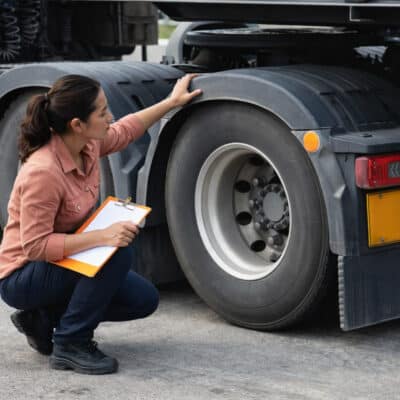
Not all truck operators are employees of the carrier whose name appears on the trailer. Many are owner-operator independent contractors who purchase their own equipment and accept loads via carriers/freight Brokers.
Whether an owner/operator is considered an independent contractor versus an employee is important from a legal standpoint, but it’s not always clearly defined. If a freight broker negligently hires a carrier with questionable safety history, or if an owner/operator is subject to sufficient direction/control by a carrier (thus blurring lines between contractor status vs. employee status), they may share liability for an accident. This aspect of trucking law can be quite confusing, hence why having counsel that regularly handles trucking cases is beneficial.
Cargo Loaders/Shippers
Improperly loaded/unsecured Cargo can pose major risks for accidents. A shifting load during transport can cause a commercial truck to become unstable (and possibly roll over); dislodge debris into traffic lanes; etc.
The FMCSA (Federal Motor Carrier Safety Administration) establishes strict standards for securing Cargo (as outlined below); thus, violations thereof could give rise to liability for persons responsible for loading Cargo, whether shippers, loaders, or carriers. If hazardous materials were transported without proper warnings or labels, this creates additional avenues for liability.
Maintenance/Repair Providers
Commercial trucks require routine, proper maintenance. Failing to properly perform routine maintenance, such as worn-out brake pads, failing tires, malfunctioning lights, and/or a faulty steering system, could lead to loss of control and ultimately result in an accident.
If a third-party repair facility fails to properly repair the vehicle, the repair facility may bear some liability. If the carrier ignores or fails to report known mechanical issues prior to transporting goods, then the carrier may also bear some liability.
Manufacturers of Vehicles & Parts
Defective parts manufactured for use in commercial trucks are another major factor in many truck-related accidents. Braking systems, tires, steering components, and electronic stability systems are examples of products that could fail and cause an accident resulting in catastrophic injuries or fatalities. Product liability laws provide grounds for lawsuits against manufacturers for producing defective products.
Specifically, in South Carolina, there are two types of product liability claims that can be filed against manufacturers: negligence claims and strict liability claims. To file a negligence claim, plaintiffs must demonstrate that the manufacturer was careless in designing and manufacturing the product. However, to file a strict liability claim, plaintiffs need only demonstrate that the product was defective and resulted in harm.
Government Agencies/Road Contractors
Poorly designed roads/lack of clear signage/unmarked dangers/construction zones with hazardous conditions can all contribute to commercial Vehicle wrecks. When a local/municipality/government agency has created road hazards that have contributed to your collision, they may be held liable.
This is where it gets tricky; government agencies have immunities (sovereign immunity) that do not exist in civil suits against private entities, but those immunities have exceptions, and the South Carolina Tort Claims Act permits certain claims against Government Entities. However, governmental agencies have stricter deadlines/time frames for notice requirements; see chart under “deadlines” above.
Liability for Other Drivers/Third Parties
Sometimes, a truck accident occurs due to a series of events initiated by another driver. For example, another driver cuts off a truck driver; the truck driver swerves to avoid an accident; and subsequently loses control of his vehicle and becomes involved in an accident. In these instances, the third-party driver who initially cut off the truck driver may be partially responsible for the damage resulting from subsequent accidents. Under South Carolina’s comparative fault rules, damages may be allocated based on the percentage of blame assigned to each responsible party.
Insurer Liability
Insurance companies cannot usually be named as defendants in personal injury suits, as they did not cause the accident. However, insurance companies become relevant in various contexts, including bad faith insurance claims and under-insured motorist coverage disputes, where an injured individual seeks compensation from their own insurance carrier when the at-fault driver(s) have insufficient insurance coverage to pay full damages owed to the injured party.
Regulations & Contracts Impacting Liability
Both federal and state governments regulate commercial trucking. The U.S. Federal Motor Carrier Safety Administration (FMCSA) enforces numerous regulations regarding hours of service for drivers; driver qualifications; Vehicle inspections; cargo securement, etc. Additionally, states have their own commercial Vehicle regulations. Violation of regulations by carriers or drivers may be used as evidence of negligence per se; i.e., failure to comply with a regulation establishes negligence without requiring proof that the defendant acted reasonably under the circumstances. Thus, violating regulatory obligations can serve as an admission of liability.
Carrier/Boker/Shipper Contracts
Contractual relationships between carriers/brokers/shippers and owner/operators define responsibilities such as maintenance of equipment, driver training, and cargo security. If a party fails to meet its contractual obligations, it may be liable for damages arising from breach. Conversely, contractual provisions may benefit a plaintiff by defining specific duties that must be fulfilled by the defendant.
Brief Example
An owner-operator is contracted by a freight broker to transport a shipment from Myrtle Beach, SC, to Charlotte, NC. As per the terms of the agreement between the broker and owner-operator, the broker has a duty to ensure that the owner-operator maintains his tractor/trailer in a safe operating condition. On Interstate 26 near Columbia, SC, while hauling a load of drywall for the broker’s customer, the owner-operator’s brakes fail, resulting in a severe multi-vehicle collision injuring several persons. Maintenance records reveal that weeks prior to the accident, the owner-operator’s mechanic had noted that new brake pads were needed, but never installed them. In this instance, the owner-operator is clearly liable for failure to replace brake pads prior to hauling goods.
However, since the freight broker hired the owner-operator, knowing he was inadequately equipped, the freight broker may also be considered liable for his failure to ascertain prior to hiring whether the owner-operator maintained adequate safety standards.
Insurance Coverage Requirements
All commercial vehicles carrying hazardous materials are required by federal law to have minimum liability insurance coverage ranging from $1 million to $5 million, depending upon the type of cargo being hauled. Most freight (non-hazardous) is required to have $750,000 minimum liability coverage.
Many trucking companies purchase umbrella policies (excess coverage) for protection beyond their standard liability limits, as well as obtain separate cargo insurance and employer liability insurance. Multiple policies covering different aspects of an accident are very common in serious truck accidents. Early identification of all applicable insurance policies is crucial in order to file timely claims with each respective insurer.
Investigation Process
Truck accident investigations are significantly more complex than investigations for ordinary automobile accidents. Here is how most investigators go about investigating a truck accident:
Initial steps after crash: Move out of danger; call police; obtain medical attention even if suffering no apparent injury (adrenaline may mask pain); take photos/videos of both tractor-trailer and trailer, including cargo; document roadway conditions; record any skid marks; capture names/contact information from witnesses.
Protecting key evidence: At this point in time, attorneys earn their fees. Truck accident cases involve disappearing evidence quickly; therefore, it is crucial to preserve all relevant records, including:
- Electronic logging device (ELD) data showing hours worked by driver
- Driver qualification files, which include driving history & training records
- Hours-of-service logs (paper & electronic)
- Vehicle maintenance records
- Manifests/cargo loading documentation
- Event data recorder (black box) data showcasing speed/brakes/etc. At the time of collision
- Dash cam/surveillance video from the tractor-trailer/the nearby businesses/traffic cameras
- Driver post-accident drug & alcohol testing results
- Internal communications between the carrier regarding the incident
Spoliation letter: A well-practiced personal injury lawyer will normally begin by sending out a formal spoliation letter (demand for preservation) demanding that the motor carrier and its insurance provider “preserve” (keep safe from loss or destruction) all documentation that may potentially relate to your claim, and prevent any destruction or overwriting of electronic files. Most trucking companies maintain a document retention policy which would normally cause them to dispose of records at some point in time. The purpose of the spoliation letter is to put into place a binding agreement that requires them to hold onto those documents.
Your own documentation: Maintain a daily journal detailing the level of pain/injury/difficulty experienced performing daily tasks/relationship strain caused by injury; collect every medical bill/receipt/expense related to the accident; this will help build your non-economic damages claim
Hurt in an Accident? Hire Maguire
Give us a call for a FREE & CONFIDENTIAL Case Review*Damages That Can Be Recovered After a Truck Crash in South Carolina
South Carolina laws provide numerous ways for truck crash victims to receive compensation.
Economic damages include quantifiable expenses resulting from a truck crash, such as:
medical bills, both current and projected costs associated with rehabilitation and/or physical therapy, lost income due to being unable to work because of the injuries sustained during the truck crash, reduced earning potential if injuries are going to be present over the long-term, or permanently damaged personal property.
Non-economic damages are subjective and difficult to assign a value. However, these are real. Examples of non-economic damages include, but are not limited to, pain and suffering, emotional distress, decreased ability to enjoy life, and loss of spousal consortium.
Punitive damages differ greatly. Punitive damages are intended to punish the defendant for extreme behavior and discourage the defendant from similar actions. Punitive damages cannot be awarded in South Carolina unless the defendant acted willfully, wantonly, recklessly, or engaged in egregious behavior. For example, a trucking company that deliberately allowed a driver to exceed lawful hours of service or concealed a known mechanical failure may be subject to punitive damages. Punitive damages are often substantial.
An additional consideration is whether there are multiple defendants within the case. In many instances, the total sum available to the plaintiff under the policies issued by each defendant’s insurer may exceed the total sum available under a single policy issued by a single defendant.
What To Do Immediately Following a Truck Crash
At the scene:
Contact 911 and obtain emergency medical assistance regardless of whether you believe you require immediate medical attention.
- Do not offer an apology or admission of fault concerning the accident.
- Obtain the truck driver’s name, CDL number, and contact information for his/her insurance provider(s).
- Take photographs of:
- The trucks involved in the collision,
- Any cargo being transported by either party,
- Skid marks left at the site of the collision,
- Road conditions,
- Traffic control devices located at the site of the collision,
- Your injuries;
- Determine the identity and telephone number of any witnesses present at the scene;
- Request the incident report number from the responding police officer.
Following the Incident:
- Follow all prescribed medical treatments; gaps in treatment can negatively affect your claim;
- Report the occurrence of the accident to your own insurance carrier(s); however, before providing them with a recorded statement, consult with a lawyer.
- Maintain documentation of all expenses incurred as a direct result of the accident;
- Avoid posting any comments on social media regarding your involvement in the truck accident; insurance providers regularly scan these websites and may use any seemingly innocuous comment posted online as justification for minimizing your claimed injuries or degree of pain.
Why Choose a South Carolina Truck Crash Attorney?
Unlike regular motor vehicle accidents, truck crashes involve complex federal regulations that few people understand, multiple corporate entities with aggressive defense counsel, and evidentiary issues that must be addressed within minutes after an accident occurs.
Truck carriers employ experienced insurance adjusters, attorneys, and investigators upon learning of an accident. Their objective is to limit their financial exposure. Your goal, as an injured person, is to create a balance in terms of resources.
At Maguire Law Firm, we manage the complete investigation of your case. Specifically, we identify all potentially responsible parties, issue preservation letters, engage in accident reconstruction analysis, analyze logbooks and maintenance documents, and interface with insurers so you can concentrate on recovering from your injuries. Since our fees are based upon contingency, you don’t owe us anything unless we prevail in your case.
This model doesn’t simply promote fairness in terms of resources; it ensures we only take on cases we truly believe in and will aggressively pursue for maximum results.
Hurt in an Accident? Hire Maguire
Give us a call for a FREE & CONFIDENTIAL Case Review*About Maguire Law Firm
Founded by Ian D. Maguire in 1994, Maguire Law Firm has successfully represented thousands of injured residents of South Carolina. Through its representation of plaintiffs in personal injury litigation, Maguire Law Firm has recovered tens of millions of dollars in compensation for them.
Ian D. Maguire has received recognition from Martindale-Hubbell (AV Preeminent), Super Lawyers, and Best Lawyers in America. Attorneys employed by Maguire Law Firm include Brittney Farish Jones, Tiffany Kayla Buffkin, and G. Michael Smith. Each attorney focuses on representing persons harmed in automobile accidents and is dedicated to providing the same quality of service to every client.
Maguire Law Firm operates offices in Myrtle Beach, North Myrtle Beach, and Florence. It represents clients throughout South Carolina. Clients frequently praise the firm’s ability to listen and communicate with them regularly during difficult times.
“Hurt? It’s Time to Be Heard” isn’t merely a slogan; it reflects the way Maguire Law Firm approaches injury litigation.
You Do Not Have To Face This Challenge Alone
A truck accident case can be extremely complex. There may be several parties that shared responsibility for the incident. Evidence must be preserved promptly. Deadlines typically occur far faster than most individuals anticipate. Your comparison of fault may also greatly decrease or completely eliminate your entitlement to monetary compensation if the opposing side can shape how the facts are presented.
Some things to consider:
- South Carolina follows a comparative fault standard, which means you have to prove negligence on behalf of one or more parties. That negligence may emanate from many different sources;
- Even a 25% finding of fault by you will cost you $125,000 (or approximately one-fourth) of your total entitlement to $500,000 in damages;
- The general statute of limitations is three (3) years; government entity claims can range from two (2) years or less, depending on the governmental agency and additional deadlines that begin even earlier than those applicable to private party claims.
- Facts disappear rapidly; ELD records, video cameras located inside trucks, repair records, and other forms of evidence must be preserved promptly, or they may forever be lost;
- Maguire Law Firm charges no fee whatsoever unless your case is successful.
If you have been injured by a truck, or if someone you care about has been injured by a truck, call Maguire Law Firm today to schedule a complimentary case evaluation with one of our attorneys. You can contact us by calling us toll-free at (843) 361-7549 or by completing the form on our website, https://maguirelawfirm.com/. We will provide you with a no-cost assessment of your potential claim. The quicker that you speak with one of our attorneys, the sooner we can begin working on your behalf and protect your rights.
Contact us today to discuss your case.
Schedule a free* consultation to learn how our team can help you pursue fair compensation for your injuries.
* Disclaimer: Past results do not guarantee future outcomes. “Free* consultation” or “Free* Case Evaluation” refers only to the initial evaluation of your case and does not imply that legal representation is free*. Clients may be responsible for costs in addition to the attorney’s fees. Percentage fees are calculated before deducting costs from the gross recovery. No comparison is intended or implied between Maguire Law Firm’s services and those of other lawyers. Testimonials and endorsements do not constitute a guarantee, warranty, or prediction regarding the outcome of your case. Attorney Ian Maguire, Office: 1601 North Oak Street, Myrtle Beach, SC 29577.
Last updated Wednesday, August 12th, 2026